In Hugh Wallace’s passing, Ireland’s small screen has lost its designer frontman.
As the creator of much of the theatre of retail we now take for granted, Hugh Wallace was much more than a TV persona.
He was the master of reinvention.
He set up Douglas Wallace with his Bolton Street contemporary, having just graduated from college in the early 1980s.
It was said that he got Alan to help him with his thesis, Adrian Lambe, MD of Douglas Wallace, explains.
Wallace had dyslexia, so the story may well be true, but it set the pace for their company, Lambe explains. Alan sat behind the desk, and Hugh was front of house, the client liaison, half of the partnership.
The company started working with Peter Mark, with Peter and Mark Keaveney, as the salon chain expanded countrywide.
The work caught the attention of Brown Thomas, which was about to move across Grafton Street from the premises now occupied by Marks & Spencer, to where it is now.
“Hugh believed that design was everything and he was instrumental, for example, in the re-design of Brown Thomas when it swapped locations with Switzers on Grafton Street,” says Dr Carole Pollard, past president of the RIAI, who worked with Hugh Wallace.
“He was arguably the first architect to take full ownership of retail design, teaching colleagues, for example, how to place products in a shop,” she continues.
“Early projects included many of the retail units in the Square in Tallaght, one of Ireland’s first new shopping centres, followed by Eyre Square in Galway and Dundrum Shopping Centre, as well as salons for Peter Marks and offices for An Post.”
Out of this first run of success came BT2, a white cube altar to diffusion line shopping, a little sister to the superbrands stocked at Brown Thomas.
Then came The Morrisson Hotel, an establishment whose design put Dublin on the international map of cool. When it opened, U2 were in their second act of arena domination, and members Bono and The Edge owned The Clarence Hotel downriver on the southern bank.

When Grainne Weber of GW Design was in her late 20s, Wallace made her project architect on The Morrisson Hotel, then a temple to minimalism and the creative love child of Wallace, Weber, developer and publican Hugh O’Regan, and fashion designer John Rocha.
"The trust he placed in all of us. He was very good at giving people a project to run with. You either sank or swam," she recalls.
“The experience was absolutely formative,” she says, and opened many doors.
In fact, she still works and collaborates with many of the people that she met on that project.
Having established her own practice, she worked on The Wilder Townhouse on Harcourt Terrace and the redesign of the Dylan Hotel.
We were starting to move into hospitality, Lambe recalls.
“We’d a great designer and a great client, and we created something truly different. The company has expanded to have over 200 employees and has offices in Dublin, Galway, Belfast, London, and Prague.
"We were one of the top practices in the country at that stage.”
Dunbrody House is just one of the many hotels the firm worked on at this time.
The property that generated some of the greatest reach for the practice was The G Hotel, a collaboration with London-based Galway designer Philip Treacy, whose headwear graced rock stars, supermodels, and royalty.

The Eye Cinema in Galway won Douglas Wallace Architects the Best Commercial Building prize at the 2006 RIAI Awards.
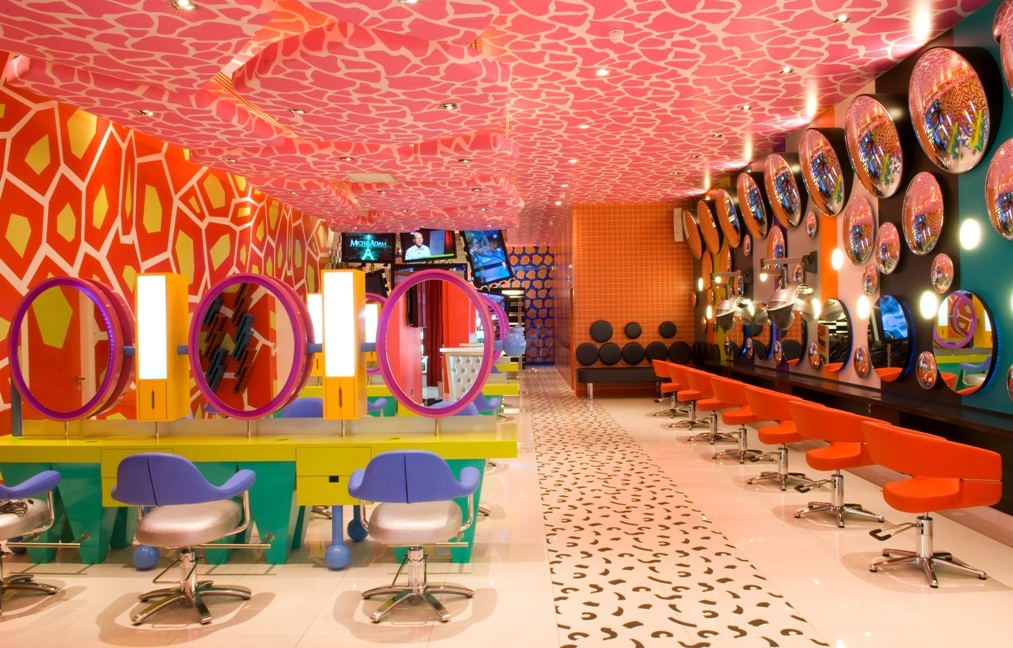
The firm designed Style Club, an unashamedly loud training centre for Peter Mark on South William Street. It might date, but let’s do it anyway, was his approach, Lambe says.
It still catches the eye.
Then came the bust, and the company was liquidated. It was devastating, but again, Wallace reinvented.
“He was great at being able to look, see what we can do and turn it to our advantage, Lambe says.
Later on, Hugh found his calling working in TV as a natural presenter and empathetic interviewer, Pollard continues.
“He enthused audiences with his knowledge about historic buildings and how to bring them back to life.
"He was an advocate for re-using and adapting older buildings in our cities, towns, and villages – including initiatives for living above the shop.
"This passion had its origins in the practice’s work in Temple Bar in the 1980s and 1990s, where clients included retailers and publicans, but also the Temple Bar Information Office.

"Long before it became common practice, Hugh believed in the importance of older buildings as part of the city fabric.”
“He was a bit of a legend before I met him,” adds architect Declan O’Donnell, who picks up the story having shared the small screen with him as one of his many co-presenters on RTE’s Home of the Year.
“He always said he only got into interiors because no one else would do it.
“His whole second life on TV was engaging. He lived life to the full and connected with people. That’s what made him so good on screen.”

After COVID, his company had to reinvent itself when the hospitality sector flatlined overnight. The Osprey Hotel in Nass for the Prem Group was reimagined at this time.
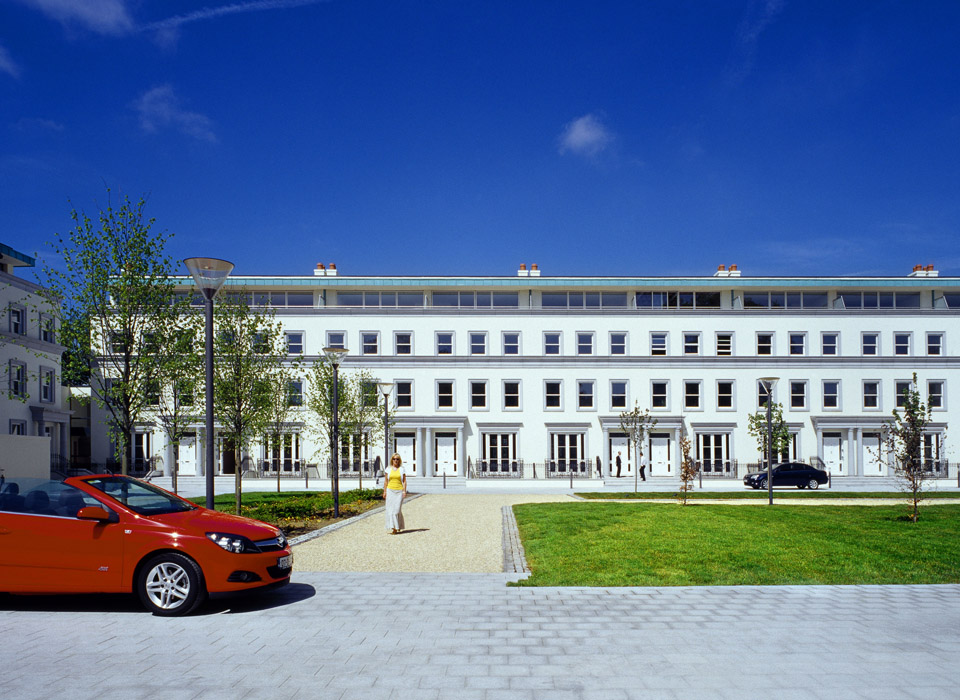
We started to do residential, Lambe says. The firm had dipped its toe in high-end developments before the crash. The Regency-style Edward Square in Donnybrook, set around two sides of a garden square, was one of the notable projects.
The huge residential quarter on the north side of Waterford’s is one of the projects Hugh has been most proud of, Lambe says.

He wanted design for all, Lambe says, something that viewers across the country tuned into his appearances on My Bungalow Bliss, The Great House Revival, and Home of the Year.
He played up, creating a bit of invective between his co-presenters on the latter, and demonstrating the depth and breadth of his knowledge on all.
“He was an everyman and a showman, a man for all seasons. He made everyone feel like his friends, like the most special person in the room. That’s what clients wanted and needed.”
In a statement, the Royal Institute of Architects of Ireland (RIAI) wrote: “Hugh has made an important and enduring contribution to Irish architecture both as an architect and as a broadcaster.
"Hugh Wallace co-founded Douglas Wallace Architects and developed the practice over 40 years into one of the most successful in Ireland, with a particular expertise in hotels, hospitality, retail, bespoke homes, and interior design.

As a broadcaster, he connected public audiences with the value that architecture brings to all our lives – from a well-designed room to a large historic or contemporary building.
Hugh Wallace made architecture accessible and emphasised that good design is available to everyone. A well-designed home does not have to be expensive, but with architectural involvement can result in better space, materials, and light.
The RIAI is deeply saddened by the death of architect and TV presenter Hugh Wallace FRIAI.
We are sending our sincere condolences to his husband, Martin Corbett, family, friends, and colleagues.
Ar dheis Dé go raibh a anam