
‘Oh goody, let’s go swimsuit shopping!’ no woman, has ever said. However, if you have a holiday upcoming and need a new costume then needs must.
Shopping for a swimsuit is anxiety-inducing, time-consuming and emotionally and physically draining. As it is the nearest most of us get to walking around undressed in public, swimwear is an emotive subject.
The Holy Grail is fashionable and flattering swimwear, but finding it is a challenge. Here we share a few tips that'll hopefully help finding your best swimsuit a positive experience, not a penance.

Mental attitude
Before starting, try to frame the experience in a better light. Do a little prep before any trying-on session: shave, exfoliate and moisturise skin so you are confident and don’t immediately focus on perceived flaws. Even apply self-tan if it helps – just ensure it is non-transferable.
Be gentle on yourself and rather than dissecting your figure, focus on anticipation of your holiday and being in the sunshine in your new swimwear. Don’t turn buying a swimsuit into a self-critique. Embrace your body and remember that confidence goes a long way.
Consider how active you will be in your swimwear
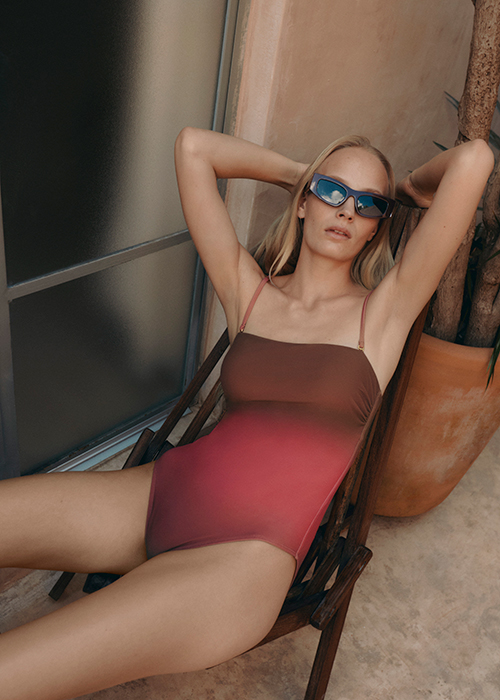
Do you need it to be decorative or functional? Will you be sunbathing and relaxing or swimming and diving? How active you are will dictate if form or function dominates your choices.
If you are the active type, be led by practicality rather than aesthetics. In this instance a really solid fabric from a more athletic or expensive brand will serve you better.
Take in the details

Look at the details such as stitching, fabric stretch and compression, Lycra content and if the suit is lined.
Always consider potential transparency, especially when wet. Stretch the fabric over your hand to assess if it is thick and sufficiently opaque.
This is particularly important for paler shades which can become very transparent in the water.
You can't avoid trying swimwear on
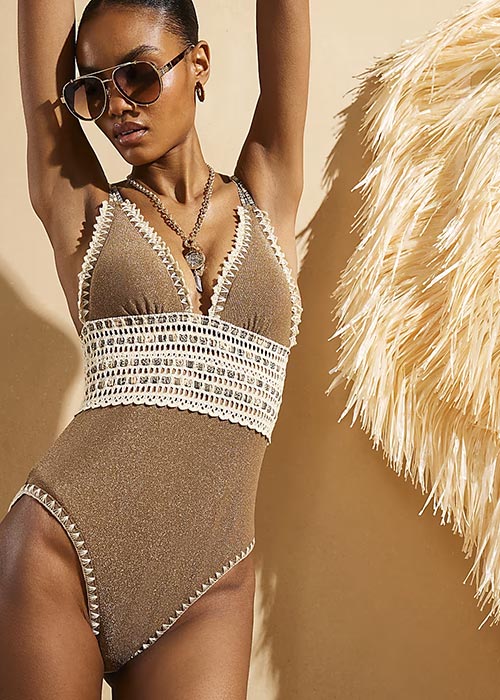
Cut, colour, fabrication and styling are all essential elements of choosing the right style. To judge these, you must try on a lot of swimwear. Whether that is in store or at home (if you shop online) you must put all swimsuits you are considering onto your body.
Yes, it is sweaty, laborious and time consuming but there is no substitute because that is when you get a sense of how well styles suit your body shape, colouring, and proportions.
Only when in a suit do you really get to evaluate how details like ruching, draping, fold-over waistbands, and boning can work with curves, support them, or even create them. The effort will crystallise what suits you.
Don’t let age inhibit you

The days when women’s choice of swimwear was defined by age are over. You can wear a bikini regardless of age – it is up to you.
What flatters your figure and makes you happy is personal and individual. Most of us will know instinctively when we have found the right swimsuit as it will make us feel confident and comfortable. Because a swimsuit is the smallest garment you will wear in public, it needs to fit perfectly.
As the most revealing garment you will ever wear, you need to feel good in it.
Think about coverage and support

Start by assessing how much coverage and support you want from your swimwear: while you might still love a bikini maybe a string style isn’t going to work if you have a larger bust or curves.
If you want a lot of support, higher necklines, halter necks and bandeau styles are good options. Details like ruching, gathering, and smocking are flattering while wide straps, full bottoms and clever seaming can really help give you a great shape and support. Consider where you need that support and camouflage. Is it your breasts, bum, or tum?

Underwiring is excellent for larger busts while bottoms with high waists or shorts styles will flatter curvy bottoms. Try to find styles that look current as styles that are frumpy or old fashioned are immediately ageing. You can have support with modern styling - they aren’t mutually exclusive.
Pay attention to the fit

Fit is everything and crucial to get right, regardless of size. Ideally it should be snug but not too tight. When a suit gets wet, it expands due to water retention: so, if it is loose to start, it will be looser again in the water. It will bunch which means it could move or even worse, fall off.
Conversely if it is too snug, it can pinch and be extremely irritating. It can be helpful at the start to go back and look at your existing swimsuits to establish fits and details that worked for you.
Looking at your normal wardrobe to see what types of necklines you wear is also a good start – is it spaghetti straps, asymmetrical necklines, v necks? Then apply this to your swimsuit search.
In terms of fit, around the bust is critical. While smaller boobs need minimal assistance, support is essential for larger busts. Straps are extremely important in a swimsuit as they anchor it in place. Adjustable, sturdy straps are helpful for allowing you to customise the fit.

If you have a larger bust, sporty shapes with wider straps can be more flattering but avoid rigid edges that can cut into you causing irritation. If you do wear a larger cup size, be wary about deep scoop backs as they don’t give adequate support.
A style with underwiring or a supportive under-band, will boost your shape, flatter and be more comfortable. Fit around the bum is also worth watching: check out your rear view to confirm that the suit is giving you the coverage you prefer.
Look for good elastication at leg openings and waistbands to keep bottoms anchored in place. Don’t worry about the size on the label, focus on fit and how comfortable it is.

Every brand has a different sizing profile and fit specifications. Be aware that swimwear can often run small due to its firm fabrication.
If you need to go up a size, do. If you are a mixed size profile, e.g. a flat chest with generous hips, look at brands that offer mix and match tops and bottoms. Remember that thicker fabrics in a decent quality and weight - will hold and sculpt you better than flimsy ones.
You get what you pay for

As with most clothes you get what you pay for. Higher quality styles will give longer wear so are more cost effective in the long-term. Inspect stitching, seams, edges and hardwear to see they are durable. Regarding fabric, buy decent quality, which means it should feel substantial not flimsy.
Remember you want it to have longevity and to survive sun, sand, chlorine, sunscreen, and multiple washes. Advances in textiles now mean that there are high performance swimsuits with UV protection, anti-snag technology, sunscreen resistance and anti-fade protection, but you will pay more for them.
Look at the fabric

Most swimwear is made from polyamide blended with Lycra or elastane. While you might not wear polyester normally, it is perfect for swimwear as it dries fast, fits snugly, is colour fast and can stand up to chlorine. The best fabric compositions is 80% nylon to 20% Lycra.
Look for fabrics with good recovery that snap back into shape – terms like firm stretch and compression will generally indicate a fabric with decent shape retention and longevity.
Nothing is worse than saggy swimwear. Fabrics with four way stretch are optimal as they stretch from selvedge to selvedge but also along the length of the fabric too. If you are worried about sustainability there are swimwear ranges which use fabrics like Econyl an alternative to nylon made from waste products.
Check reviews

If buying online, check out the customer reviews about fit and how flattering styles are. Do pay attention to size charts and always measure your bust, waist, and hips to cross-reference against these.
Look to sites that use size-inclusive models to help you visualise styles on a normal body. Anything looks good on a 5’ 10” glamazon but seeing styles on a realistic figure is more informative.
Ask for advice about fit from the brand if unsure about sizing.
Style your swimsuit

Styling details can make or break swimwear: something like ruching or gathering can be great to add emphasis for a smaller bust or to camouflage a soft tummy.
Elements like draping, ruffles, colour-blocking, print and stripes can lead the eye to your best features while diverting it from parts you want to downplay.
By choosing cleverly you can camouflage or distract from parts you aren’t as confident in. For example, if you have a short torso, a lower waistline on a bikini bottom will add the illusion of length, and if you have shorter legs, a higher cut leg will elongate them.
Vertical stripes and dark side panels are always slimming while gathers and draping will camouflage and streamline problem areas.
Stay open-minded

Be open-minded about styles - one pieces are as attractive as bikinis, it is really down to personal preference. A single colour looks sleek (e.g. this season’s rich browns and earthy reds) but mixing and matching colours and prints injects individuality and can be flattering. If you love colour and print normally, then embrace it in your swimwear too.
Prints can be forgiving and very figure-enhancing: if used cleverly, they can disguise or distract from problem areas better than a paler solid colour.
Consider the entire look – you can elevate a simple suit with a beach wardrobe including a colourful kimono, sarong, and beach bag. This will make you feel “more dressed” and more confident. Just ensure that all the elements work together.
Finally, a sun hat and sunscreen are always non-negotiable accessories, and good posture immediately makes you look slimmer.