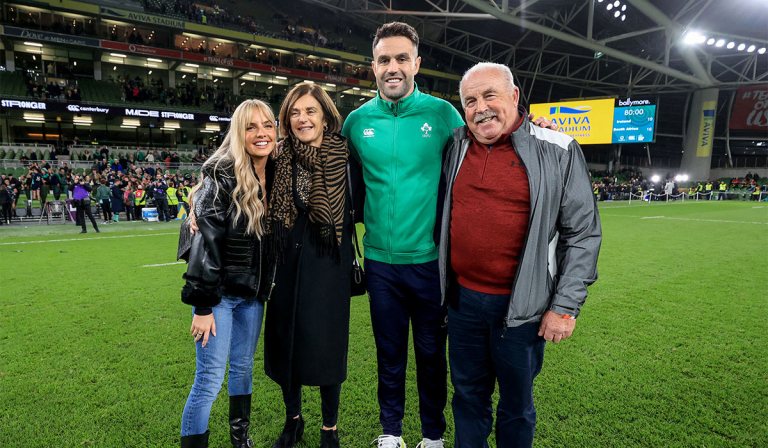

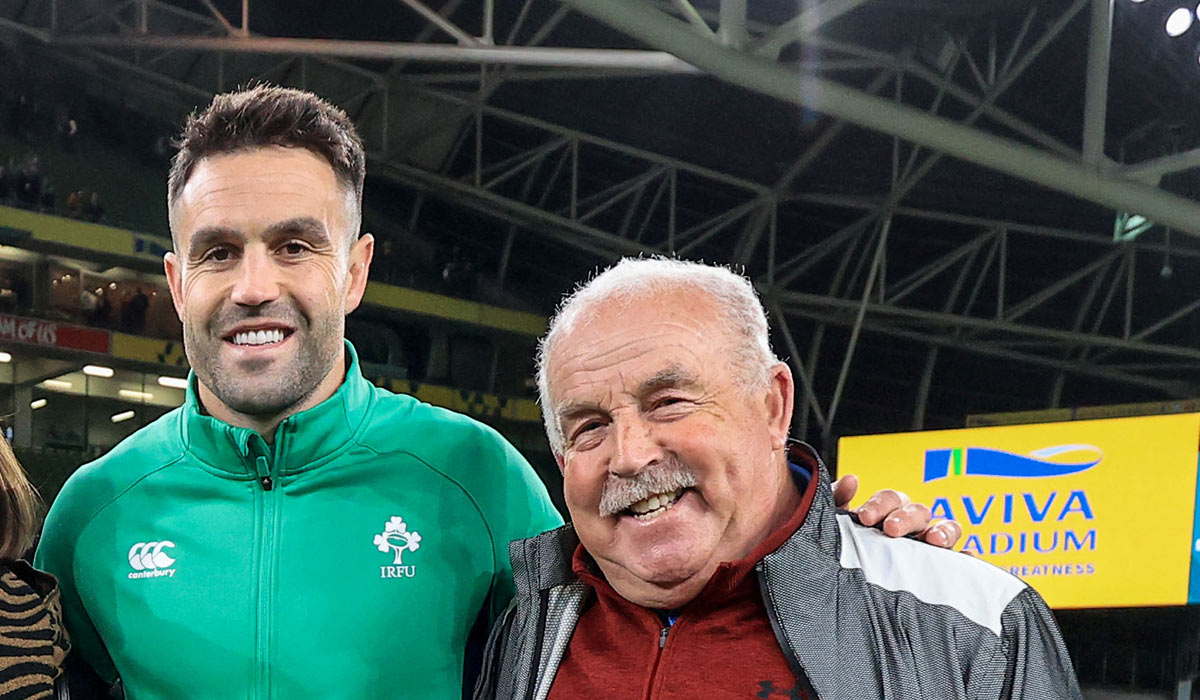
The truck driver who seriously injured Conor Murray's dad Gerry when he knocked him off his bike had previous hit-and-run and drink-driving convictions.
Gerry Murray, 70, was cycling home around 3pm, when truck driver Seamus Hanrahan - who was pulling a slurry tanker - struck him, resulting in Mr Murray sustaining a significant brain injury.
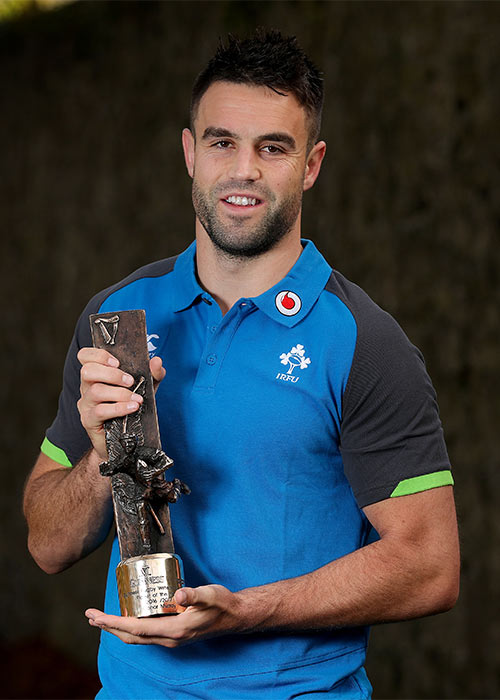
Mr Murray, whose son Conor is a Munster player who has also turned out for Ireland and the Lions, had to re-learn how to walk and talk again through a gruelling regime of medical therapies, Limerick Circuit Criminal Court heard yesterday.

Hanrahan, 53, of Kilmore, Granagh, Co. Limerick, pleaded guilty to one count of careless driving causing serious bodily harm to Mr Murray on February 7, 2023.
Prosecuting barrister Lily Buckley BL told Hanrahan's sentencing hearing that the married father-of-three, from a wellknown pig-farming family, was travelling within the speed limit, at approximately 8-10kph, along a slip road to the N20 on the day.
Ms Buckley said Hanrahan 'didn't stop when he should have' despite road markings and a red stop sign indicating road users must stop before moving out onto the main road. Taxi-driver Jim Lynch - described by Ms Buckley as a 'crucial independent witness' - told gardaí at the scene that Hanrahan didn't stop at the junction. Ms Buckley said Mr Lynch told gardaí he saw Mr Murray's bike being 'thrown out onto the road, that he was not talking, he was just lying on the side of the road'.
Hanrahan, who passed a Garda roadside breathalyser test for alcohol and drugs, remained at the scene and put his coat over Mr Murray. He told gardaí he stopped at the junction before looking left and right, and when he did not see anyone coming, he drove out onto the main road.
He told gardaí he 'heard a bang', parked up his rig on the side of the road, and discovered Mr Murray lying on the ground.
Ms Buckley argued that Hanrahan's claim he looked left and right did not appear to tally with Mr Lynch's Garda statement.
Mr Murray, who is married to former Irish international squash player Barbara Murray, was treated at the scene by paramedics and brought by ambulance to University Hospital Limerick (UHL), where doctors diagnosed him with a 'severe traumatic brain injury', a fractured skull, and bleeds to his brain.
His condition deteriorated at UHL and he was transferred to Cork University Hospital (CUH), put into a medically induced coma, and moved to the intensive care unit (ICU) for seven days.

Mr Murray spent six weeks at CUH and another ten days at St Camillus's Hospital, Limerick, undergoing occupational therapy, as well as speech and language therapy. He lost hearing in his left ear and suffers tinnitus in his right, as a result of the collision. He also attends a psychologist to help him deal with anxiety and depression. Ms Buckley said the helmet he was wearing at the time was 'extensively damaged'.
In a victim impact statement, read out by Mr Murray in court yesterday, he said the first he knew of the collision was when he woke out of his coma in hospital two-and-a-half weeks later.

'The next five weeks were spent learning to walk and doing all the basic tasks in life,' Mr Murray said. 'I have constant tinnitus and have lost my hearing in my left ear.' He said he missed his son's wedding abroad because doctors advised him not to fly 'because of the fractures to my skull, so I missed what was a major family event'.
He added: 'Life for me has completely changed and I have been trying hard to get back to pre-accident days, but there is along [road] ahead as I am still having rehab for an indefinite [period] of time.'
He thanked his family, paramedics, and staff at UHL, CUH and St Camillus's Hospital, 'where the care and support I got was exceptional'. The court heard Hanrahan had convictions for road-traffic matters, including dangerous driving reduced to careless driving; hit-and-run, failing to remain at the scene of a collision; drunk driving; failure to display current vehicle licence, and driving an untaxed vehicle.

The maximum sentence for his latest offence is two years in prison, a €10,000 fine, or both, along with a driving ban. Hanrahan's defence barrister, Amy Nix BL, asked the court to consider that her client has family responsibilities that require him to be able to drive and that he is an 'upstanding, hard-working member of his local community'.
'He is carrying the guilt with him everywhere, he wishes he could wind back the clock and prevent Mr Murray's injuries,' she said. 'He wishes to apologise publicly to Mr Murray. It was a momentary lapse of concentration, which had devastating consequences. Every time he closes his eyes, he sees Mr Murray lying on the ground.' Judge Colin Daly said he had much to consider and adjourned sentencing to May 2.
Hanrahan, supported in court by his wife and a brother, was remanded on bail.